


Source: http://news.feedzilla.com/en_us/stories/politics/top-stories/194689547?client_source=feed&format=rss
faroe islands corso james arthur ray james arthur ray elisabeth shue avastin avastin
MUMBAI, India (AP) ? India has joined China in saying it will not cut back on oil imports from Iran, despite stiff new U.S. and European sanctions designed to pressure Tehran over its nuclear program.
"It is not possible for India to take any decision to reduce the import from Iran drastically because, after all, the countries which can provide the requirement of the emerging economy, Iran is an important country amongst them," India's finance minister Pranab Mukherjee told reporters Sunday in Chicago.
India and China together accounted for 34 percent of Iran's oil exports from January to September of 2011 ? slightly more than Europe, according to International Energy Agency data.
The move is likely to be seen as a political victory in Iran, but it's unclear how Chinese and Indian companies will actually be able to pay for Iranian oil without running afoul of the sanctions, analysts said.
"It's a blow," said David Hartwell, senior Middle East analyst at IHS Jane's, adding that Iran may have discounted prices to keep the Chinese and Indians on their side. "If you have two major countries like India and China saying they will not abide by the sanctions, that's going to keep a vital line open for the Iranians to continue to sidestep the sanctions and get foreign capital."
He said India and China could just be trying to buy time to diversify their oil supplies and may steer away from Iran, especially if Saudi Arabia ? India's largest source of oil imports ? were to ramp up production and offer an attractively priced alternative.
The European Union last week imposed an oil embargo against Iran and froze the assets of its central bank. In December, the U.S. said it would bar financial institutions from the U.S. market if they do business with Iran's central bank.
India and China are ravenous energy consumers and rely heavily on imported oil. Iranian oil accounts for 9 percent of India's oil consumption and 6 percent of China's, according to the latest data from the IEA.
Iran exports 2.5 million barrels of oil per day, about 3 percent of world supplies. About 500,000 barrels go to Europe and most of the rest goes to China, India, Japan and South Korea.
China has called for negotiations over Iran's nuclear program. South Korea has been non-committal about the sanctions, and Japan is seeking an exemption, saying its Iranian oil imports have steadily declined and probably will continue to do so.
Kyodo News agency reported that senior Japanese and U.S. officials on Thursday will hold their second meeting on the sanctions this month.
"I believe it may not be easy to come to a conclusion on this matter in the upcoming discussions," Foreign Minister Koichiro Gemba said.
Western sanctions could make it harder for India to pay for the oil it gets from Iran. Past sanctions have already delayed payments by Indian oil importers, who have had to scramble to find banks willing to handle transactions with Iran.
India's central bank governor D. Subbarao said last week that the current payment mechanism was "working fine," though India was also "exploring other options," which he declined to discuss.
Indian companies now reportedly route payments through Turkey's Turkiye Halk Bankasi AS, after EU pressure forced German-based Europaisch-Iranische Handelsbank AG to stop handling the payments last year.
IHS Jane's energy analyst said Turkey is unlikely to shut down that route immediately, noting that Turkish oil refiner Tupras also uses this payment mechanism.
"But this route remains susceptible to external pressure," she added by email. "India is now discussing rupee based payments and direct trade ? however that has a number of drawbacks for Iran given the trade imbalance and restrictions on use. China isn't publicly discussing options but I imagine other currency payments are also on the cards there."
The U.S. and its allies believe Iran is using oil revenues to develop nuclear weapons, but Tehran insists its nuclear program is purely for peaceful purposes.
Associated PressTraders work on the floor of the New York Stock Exchange Monday, Jan. 30, 2012. Uncertainty about a deal between Greece and its creditors to ease its debt burden is weighing on investor sentiment. (AP Photo/Richard Drew)
Traders work on the floor of the New York Stock Exchange Monday, Jan. 30, 2012. Uncertainty about a deal between Greece and its creditors to ease its debt burden is weighing on investor sentiment. (AP Photo/Richard Drew)
Specilaist David Pologruto, works at his post on the floor of the New York Stock Exchange Monday, Jan. 30, 2012. Uncertainty about a deal between Greece and its creditors to ease its debt burden is weighing on investor sentiment. (AP Photo/Richard Drew)
Andrew O'Connor, foreground left, and fellow traders work on the floor of the New York Exchange Monday, Jan. 30, 2012. Uncertainty about a deal between Greece and its creditors to ease its debt burden is weighing on investor sentiment. (AP Photo/Richard Drew)
Traders work on the floor of the New York Stock Exchange Monday, Jan. 30, 2012. Uncertainty about a deal between Greece and its creditors to ease its debt burden is weighing on investor sentiment. (AP Photo/Richard Drew)
NEW YORK (AP) ? The wait for an expected deal between Greece and its creditors rattled financial markets around the world Monday. Yields for ultra-safe U.S. government debt hit their lowest this year, the euro dropped against the dollar, and European stocks took a fall.
But U.S. stocks dropped only slightly. The Dow Jones industrial average fell 6.74 points to close at 12,653.72, for a drop of 0.1 percent. The Dow lost as much as 131 points in morning trading then slowly recovered in the afternoon.
Borrowing costs for European countries with the heaviest debt burdens shot higher. The two-year interest rate for Portugal's government debt jumped to 21 percent after trading around 14 percent last week.
Greece and the investors who bought its government bonds were said to be close to an agreement over the weekend. A tentative deal would replace bonds held by investment funds and banks with new ones at half the face value.
The plan is aimed at cutting Greece's debt by roughly ?100 billion ($132 billion). Greece needs it to secure a crucial installment of bailout loans and make an upcoming bond payment. But a deal has been in the works for weeks and could still fall apart.
The focus on Greece has shifted attention away from what's going well in the U.S., said Jack Ablin, chief investment officer at Harris Private Bank. Companies have reported stronger quarterly earnings, and hiring has picked up.
"Our collective breath has been held for so many months," he said.
At this point, a good or even a bad resolution of Greece's debt crisis could lead to a stronger U.S. stock market, Ablin said.
"If it finally happens and the world doesn't fall apart, maybe we'll have a reason to take risk again," he said. "Once you pull off the Band-Aid, it feels better."
U.S. Treasury yields sank to their lowest level this year as traders parked cash in the safest assets. The yield on the 10-year Treasury sank to 1.85 percent. It was trading above 2 percent last Wednesday.
The yield on the five-year Treasury note hit a record low of 0.71 percent early Monday. It finished Monday at 0.74 percent, from 0.75 percent late Friday.
An agreement between Greece and its creditors could serve as a blueprint for other European countries with heavy debt burdens. Dan Greenhaus, chief global strategist at BTIG, pointed to Portugal's soaring bond yields in a note to clients.
"At this rate, Portugal is going to move from the back to front burner in very, very short order," he said.
European leaders also gathered in Brussels, focusing on how to stimulate economic growth when huge government spending cuts threaten to push many countries back into recession. The latest data showed Spain's economy shrank in the last three months of 2011.
In other trading, the Standard & Poor's 500 index fell 3.32 points, or 0.3 percent, to 1,313.01. The Nasdaq composite lost 4.6 points, or 0.2 percent, to 2,811.94.
The euro dropped 0.5 percent against the dollar, to $1.3124 in late trading Monday from $1.3208 late Friday. It was worth almost $1.50 in May.
European stocks sank. French and Spanish stock markets closed down 1.6 percent. Italian stocks closed down 1.2 percent and German stocks 1 percent.
Among stocks making big moves Friday:
? The fast food chain Wendy's fell 3.8 percent. The Wendy's Co. said a key measure of earnings dropped 30 percent in the fourth quarter. Charges from selling Arby's offset the effects of a jump in sales.
? PharMerica Corp. plunged 11 percent. The Federal Trade Commission said it was suing to block rival pharmacy company Omnicare Inc. from completing its $457 million takeover of PharMerica. The agency said a merger of the country's two largest long-term care pharmacies would raise the cost of Medicare prescription plans covering drugs for nursing home residents. Stock in Omnicare Inc. fell less than 1 percent.
? Thomas & Betts Corp. soared 23 percent on news that Swiss engineering group ABB Ltd. agreed to buy the maker of power lines and other electrical products for $3.9 billion in cash.
Associated Pressjordy nelson hot chelle rae guile alton brown weather los angeles caleb hanie nascar

There is widespread disappointment in the economy's performance in the fourth quarter, reports CNBC's Steve Liesman. Analysis on the data with Jim Paulsen, Wells Capital Management and Tom Porcelli, RBC Capital Markets.
Related Links:
Business & financial news headlines from msnbc.com
Top of page
Source: http://video.msnbc.msn.com/cnbc/46163538/
john tucker must die uk basketball iowa state faroe islands faroe islands corso james arthur ray

Source: http://feeds.gawker.com/~r/gizmodo/full/~3/GYuWqa5tWBE/netflix-decides-to-ditch-video-game-rentals
rick perry gaffe rick perry gaffe graham spanier graham spanier penn state board of trustees brett ratner jerry sandusky
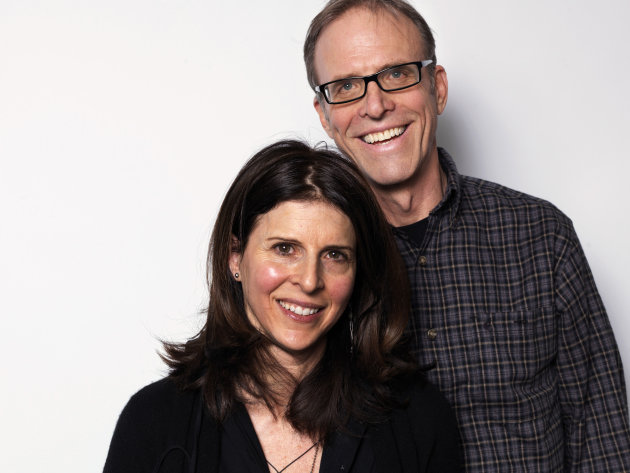
PARK CITY, Utah (AP) ? The Department of Defense estimates that more than 19,000 military men and women were sexually assaulted by fellow troops in 2010 while serving in the United States armed forces. At least 20 percent of servicewomen and 1 percent of men ? an estimated 500,000 troops ? have experienced sexual trauma while serving.
These troubling statistics motivated documentarian Kirby Dick and producer Amy Ziering to make "The Invisible War," a film that examines the epidemic of rape within the military, how it affects victims and why so few cases are prosecuted. The film premiered at the Sundance Film Festival, where it is a contender in the U.S. documentary competition.
The statistics "were just so astonishing that at first we didn't believe it," said Dick, adding that he was equally surprised that no film had been made on the subject.
Through interviews with rape survivors and military officials, "The Invisible War" suggests that it's not just the violence and harassment that traumatizes victims but the absence of impartial justice and personal retaliation they often experience after reporting the incident. A rape survivor's only judicial recourse is to report the attack to her commander ? even if he was the attacker ? and it's his decision whether to investigate and prosecute, regardless of the evidence.
"If they investigate it, and the investigator comes back and says, 'I've got a slam-dunk case. I can put this serial perpetrator behind bars,' the commander can, on his or her own, decide, 'No, we're not going to send this case to court martial,'" Dick said.
A 2009 study shows that only 8 percent of military sex offenders are prosecuted.
"The Invisible War" introduces viewers to Kori Cioca, who left the Coast Guard after being beaten and raped by her supervisor. Five years later, she still suffers from post-traumatic stress and has yet to receive Veterans Administration approval for the surgery she needs to repair the injuries she suffered during the attack. The perpetrator, who continues to serve in the Coast Guard, hit her so hard that he permanently dislocated her jaw.
Viewers also meet Marine Corps 1st Lt. Ariana Klay, who served in Iraq before being gang-raped by a senior officer and his friend while stationed at the elite Marine Barracks in Washington, D.C. Klay's husband, also a Marine, cried as he described his concern and fear that his wife would commit suicide.
Other rape survivors shown in the film, including Cioca, said they also contemplated suicide.
Hannah Sewell, who comes from a military family, said she has trouble convincing herself that she is still a virgin after being raped while serving in the Navy. Her father, wearing his own military uniform, recounts the story through tears.
Dick and Ziering traveled the country to interview some 70 survivors of military rape.
"We weren't really ready for all the stories we heard," Ziering said. "Each one had a lot of similarities and all were equally horrific."
But the filmmakers said they remained optimistic throughout the project and have been gratified by the film's reception at Sundance, where politicians such as U.S. Sen. Barbara Boxer of California; U.S. Rep. Jackie Speier, Lt. Gov. Gavin Newsom and U.S. Rep. Mike Turner of Ohio attended the premiere. Grammy winner Mary J. Blige has also pledged to write an original song for the film.
"Our great hope was and continues to be that capturing (survivors') experience and their trauma will help change things for hundreds of thousands of men and women who are in the armed forces," Dick said.
There's also "a history of hope," he said, because when the military set out to banish the segregation and racism that reigned among troops in the early 1960s, they made significant strides in just over a decade.
"They can do the same thing with this," he said.
So why don't they?
"They don't take it seriously enough," Ziering said. "They don't really see, and what we're hoping the film will show is the repercussions of it. They don't understand the amount of damage this is doing and how it really is a national security issue, and also costing taxpayers billions of dollars in just caring for people with this kind of trauma.
"Once that message gets through to them, they will be motivated to make a change, because it's a no brainer. They have to do something."
___
AP Entertainment Writer Sandy Cohen is on Twitter: www.twitter.com/APSandy .
___
Online:
www.invisiblewarmovie.com
www.sundance.org/festival
cobra starship blue whale melissa joan hart sylvia plath def leppard tim wakefield tim wakefield
WARSAW, Poland ? Polish officials vowed Monday to stick to plans to sign an international copyright treaty that has outraged Internet activists and prompted an attack on government websites.
A government minister, Michal Boni, defended the Anti-Counterfeiting Trade Agreement, or ACTA. He said that signing the international treaty would not hamper Internet usage and that Poland will sign it on Thursday, as planned.
"The ACTA agreement in no way changes Polish laws or the rights of Internet users and Internet usage," Boni, the minister of administration and digitization, said after a meeting with Prime Minister Donald Tusk and Culture Minister Bogdan Zdrojewski.
Internet opponents of ACTA fear it could lead to censorship online.
Monday's developments came after a Twitter account using the name "AnonymousWiki" announced plans on the weekend to attack government websites to protest the government's support for ACTA. Within hours on Sunday, the websites of the prime minister, parliament and other government offices were unreachable or sluggish, the hallmarks of a denial-of-service attack.
The technique works by directing streams of bogus traffic at a website, jamming it in the same way that a telephone line can be overwhelmed by hundreds of prank calls.
In an initial response Sunday, government spokesman Pawel Gras suggested there hadn't been an attack at all on the sites. "This isn't an attack by hackers, but just the result of huge interest in the sites" of the government offices, he said, a comment that quickly became a source of ridicule on Facebook and other Internet sites.
By Monday, with the sites still paralyzed, the prime minister held a meeting to reconsider their stance on the treaty.
"It was a velvet attack by hackers, but still it was an attack. Pawel Gras was wrong," said Slawomir Neumann, a lawmaker with the government Civic Platform party. Neumann said the situation showed that the Polish government is poorly prepared to handle such attacks.
Boni acknowledged in a radio interview Monday morning that the government had failed to hold enough consultations with the public on the matter.
An opposition party, the Democratic Left Alliance, also called on the government to not sign the treaty in a gesture of solidarity with those who warn it could hurt Internet freedom.
Anonymous, the group suspected of involvement in the attacks, made a number of threats before and during the Internet disruptions.
"Dear Polish government, we will continue to disrupt and interfere with your government official websites until the 26th. Do not pass ACTA," one tweet by AnonymousWiki said.
It also threatened more trouble should Poland sign ACTA.
"We have dox files and leaked documentations on many Poland officials, if ACTA is passed, we will release these documents," AnonymousWiki said in a separate tweet.
Although its scope is broader, ACTA shares some similarities with the hotly debated Stop Online Piracy Act, which was shelved by U.S. lawmakers last week after Wikipedia and Google blacked out or partially obscured their websites for a day as part of a protest against Web censorship.
ben nelson extreme couponing taylor lautner act sinead o connor dan marino passing record ipad 2 cases
